
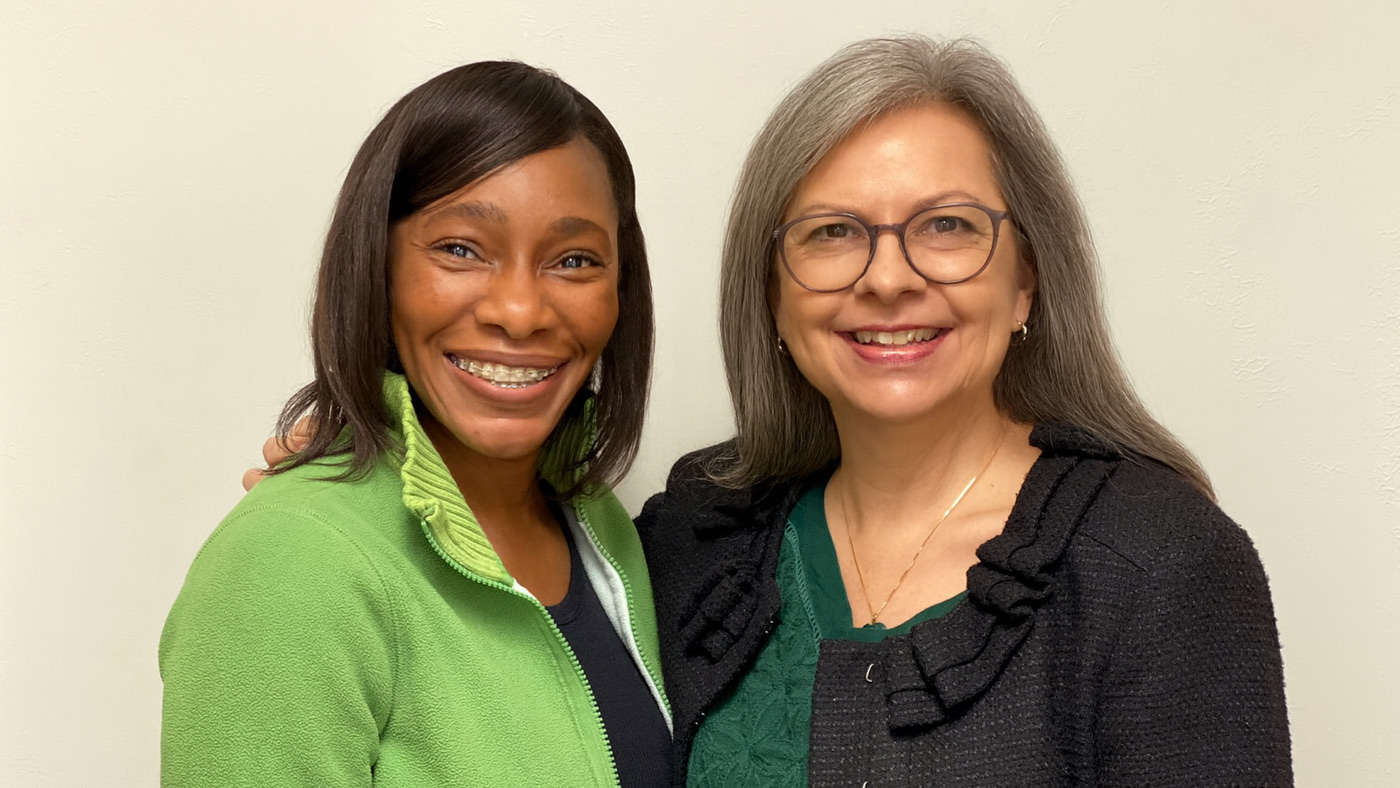
Behind every sickle cell disease (SCD) statistic are real people learning to navigate the challenges. This fact drives a collaboration between our School of Nursing and School of Behavioral Health, where two researchers have dedicated themselves to transforming how communities understand and support those affected by SCD and sickle cell trait (SCT).
Lisa Roberts, DrPH, and Carlene Fider, PhD are creating ways to redefine how healthcare providers approach care, reproductive health, and awareness for people living with SCD.
Advancing Research to Improve Maternal and Reproductive Health
In 2023, Loma Linda University School of Nursing received a $2.2 million grant from the Health Resources and Services Administration (HRSA) to enhance care and awareness for young adults living with sickle cell disease. The grant also aims to reduce maternal health disparities, a key area of concern for those living with SCD or carrying the trait.
Dr. Roberts, who leads the HRSA-funded initiative, and is the Research Director for the School of Nursing, said the project’s purpose is both scientific and deeply human.
“While clinical advances have extended the lives of people with SCD, their distinct reproductive maternal health needs remain inadequately addressed. Family is the foundation of both longevity and quality of life.” - List Roberts, DrPH
The initiative focuses on two key goals: Expanding maternal health disparity research and increasing research capacity at Loma Linda University Health. This includes developing a sickle cell trait database, comprehensive perinatal care protocols, and reproductive health education for patients and community members.
With robust data collection, evidence-based clinical guidance, and community-focused education, the project is reshaping how healthcare teams address maternal health disparities in sickle cell populations — all while empowering patients and training healthcare providers to engage with compassion.
A Partnership Built on Science and Compassion
At the center of the grant’s success is the partnership between Roberts and Fider, whose work demonstrates how behavioral and clinical sciences can complement one another.
Roberts brings her expertise in maternal and reproductive health, while Fider, a two-time graduate of the School of Behavioral Health, draws on family studies and psychology to ensure that community voices and lived experiences shape the research.
“Our collaboration is vital to advancing efforts that better serve young people living with sickle cell disease or trait,” Roberts said. “Together, we aim to support well-informed reproductive health decisions and deepen understanding of maternal health in this community.”
The two researchers are developing educational programs that address the lack of reproductive health resources for young people with SCD and SCT — particularly in San Bernardino County, which has one of the largest populations of individuals living with the disease in California.
“It's important for us to support individuals who have sickle cell disease in having family,” Fider said. “There are risks involved, but the decision to have a family should be up to the individuals who will be starting that family.
Read: Here’s what to know about Sickle Cell Disease in kids
Raising Awareness Through Art and Storytelling
Roberts and Fider are also bringing the conversation into the community through the Sickle Cell Warrior Superhero Art Competition, an event that invites individuals with SCD to share their experiences through art.
Supported by the HRSA grant, the competition celebrates resilience and helps reduce stigma around the disease by transforming personal challenges into creative expression.
More than giving warriors a voice to express the physical and mental complexities of navigating life with SCD, Dr. Fider explains that it also teaches the community about sickle cell while starting meaningful conversations about the condition.
Fider explains an additional, much broader effect the event could have on our community.
“We want to get the word out there and spark interest. Because who knows, there may be somebody there who wants to be a hematologist and specialize in this at some point.”
The first event was held in September, with an additional community showcase planned early next year.
Looking to the Future
Moving forward, Dr. Fider and Dr. Roberts hope to one day bring the conversation into schools, aiming to introduce these ideas to teenagers and young adults. They emphasize the importance of creating educational programs that highlight reproductive health and maternal health care. The two researchers, always looking to the future, invite us to imagine a world where our young people can overcome the knowledge gap around sickle cell and family planning.
Dr. Fider said it best:
“If we can engage educators at the high school and college level who are willing to talk about sickle cell, we can more effectively teach students about heredity and help them understand the condition. The sooner we start these conversations, the better — let’s begin talking about it everywhere.”
The end goal? Normalize discussions about SCD and SCT, reduce the stigmas associated with each, and create a society that understands how to effectively and compassionately address these conditions.
As the research and outreach efforts continue, Roberts and Fider hope their collaboration will serve as a model for how science, empathy, and creativity can intersect to make a lasting impact.