
Nursing simulations and interprofessional education (IPE) opportunities are growing and changing at an exciting rate at the Loma Linda University School of Nursing and both are contributing significantly to the nursing education experience in dynamic new ways.
Simulation is integrated across all clinical courses and cohorts to support clinical readiness in a controlled, safe environment. This past quarter 2,986 student encounters occurred within the simulation/skills lab with focus on clinical decision-making, communication, prioritization and teamwork. Simulation is also used for skills validation, remediation and supporting interprofessional collaboration, including participation in IPE events. The nursing students participate in 8 IPE events as multidisciplinary team members to grow their knowledge and apply it to their clinical practice. The events are run in collaboration with other programs at the University, including Medicine, Pharmacy, Chaplaincy, Child Life, etc.
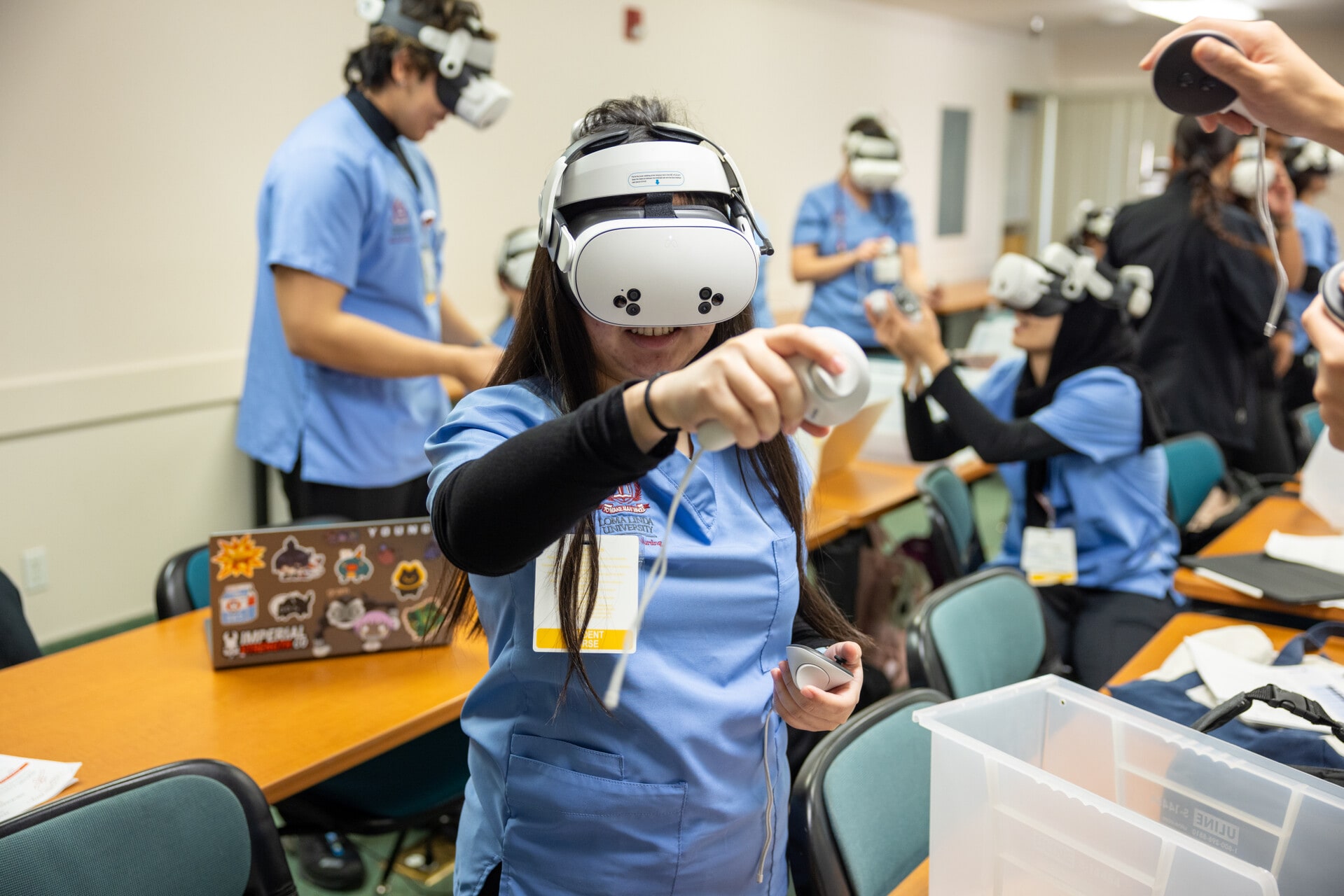
Part of the expanding integration of both simulations and IPE is the addition of new faculty and staff specialized in these concentrations. Kassy Miller, BSN, RN, CPN is a full-time faculty member at the School of Nursing and is beginning the IPE coordinator role to assist with these events. She teaches Pediatric Clinicals and is the clinical faculty for the Pediatric End-of-Life Simulation for 6th quarter students. Gabe Treuhaft is our Simulation Specialist. He enjoys and thrives in everything that supports the Simulation program and space. Gabe manages and integrates our simulation technology, coordinates and repairs mannequins and equipment, supports faculty to create the simulated learning environment, and assists students with learning new tools such as virtual reality (VR) platforms on the computer and in gaming headsets. He is integral to troubleshooting, workflow optimization and improving the overall simulation experience for both students and faculty.
With these measures in place, the outlook for success for both simulations and IPE experiences at the school is strong. The goal is to provide scalable, repeatable experiences that better prepare students to be competent, safe, and ready to transition into practice while supporting faculty with more efficient tools for instruction and evaluation.